
There is always a slowest process.
Any operation has a slowest process. That isn't a problem in itself. If the business is stable, profitable and delivering on its commitments, the slowest process is just a fact. Speed is not always the imperative. A well-run operation can be delivering for its downstream customer in a controlled and balanced way, not overproducing and not underproducing.
But ask most operational managers whether there is one part of their operation they could speed up or make less labour-intensive, and you will be met with an affirmative answer.
The difficulty is that the slowest process is not always visible. It may not be as obvious as a growing pile of half-processed product in front of an antiquated machine. More often it is pernicious: information siloed between teams, a decision sitting in someone's inbox waiting for approval, a sign-off that cannot move until one person gets to it.
These are the hardest bottlenecks to find and they can seem like the hardest to release, because the solution depends on the time of a person whose judgement genuinely cannot be delegated or automated. This person is pivotal to the operation, competent but time-poor. They are working as hard as they can to get to it as soon as they can.
So nothing changes.
The approval is processed late. Either downstream delivery is delayed or undue pressure is mounted on downstream teams to meet the original commitment, leading to errors, stress to people and plant, and additional cost.
This is a governance problem in most organisations, but it is particularly acute in SMEs where the team is smaller and the management structure flatter. The person who needs to make that decision already has every hour of the day assigned to business as usual, before whatever problems arrive that morning.
The answer is not to push the decision-maker to work longer hours at the risk of making poor decisions when overworked. The answer is to find the root cause.
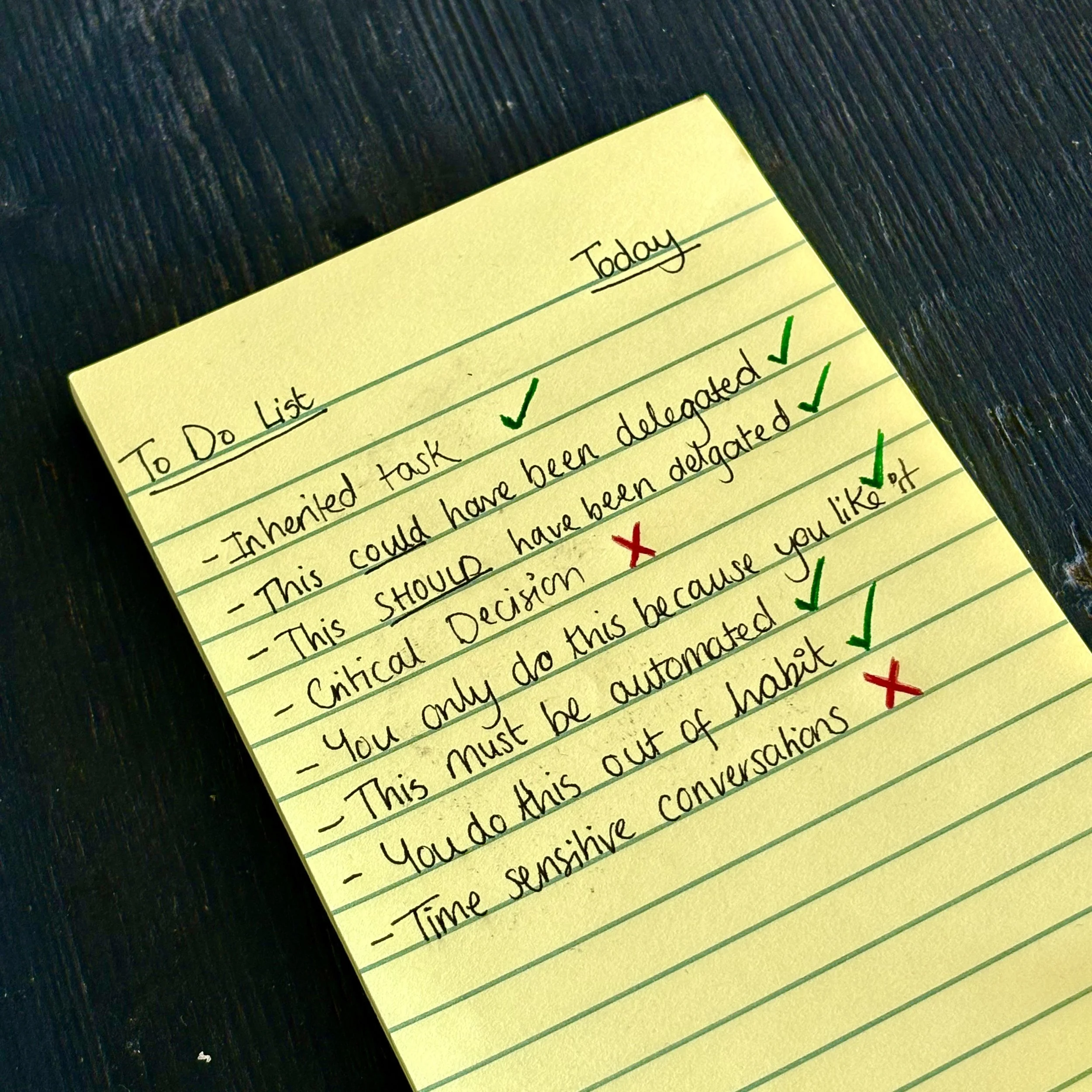
If it is that person's time that is the constraint, you look at the rest of their role and find what can be delegated or automated, so the time can be carved out and protected for the decisions that genuinely need their judgement.
That sounds straightforward. It is not always easy to see in your own operation.
I have been guilty of becoming the bottleneck myself. At Boutique Modern I used to attend every client meeting on the construction side of the business. I had done it since the construction department was founded — I was its only member — so it fell to me to write the reports and sit in the meetings. I assumed the client expected a director in attendance, and I never questioned it.
It was only once I stepped back that we could really examine the value of tying up three hours per project per month when the real value for the client was being delivered by people closer to the work. So I stopped going. The project team felt empowered. The client experience did not suffer. And I could spend that time on the decisions the business actually needed me for.
There will always be a slowest process, but as a business leader you need to make sure that it's not you.
